-1.png?width=200&height=48&name=myWorksites-logo-for-light-background%20(1)-1.png)
The road corridor has changed. Has the way we manage it kept up?
Feb 12, 2026, 4:12:07 PM • Posted by: George Wills
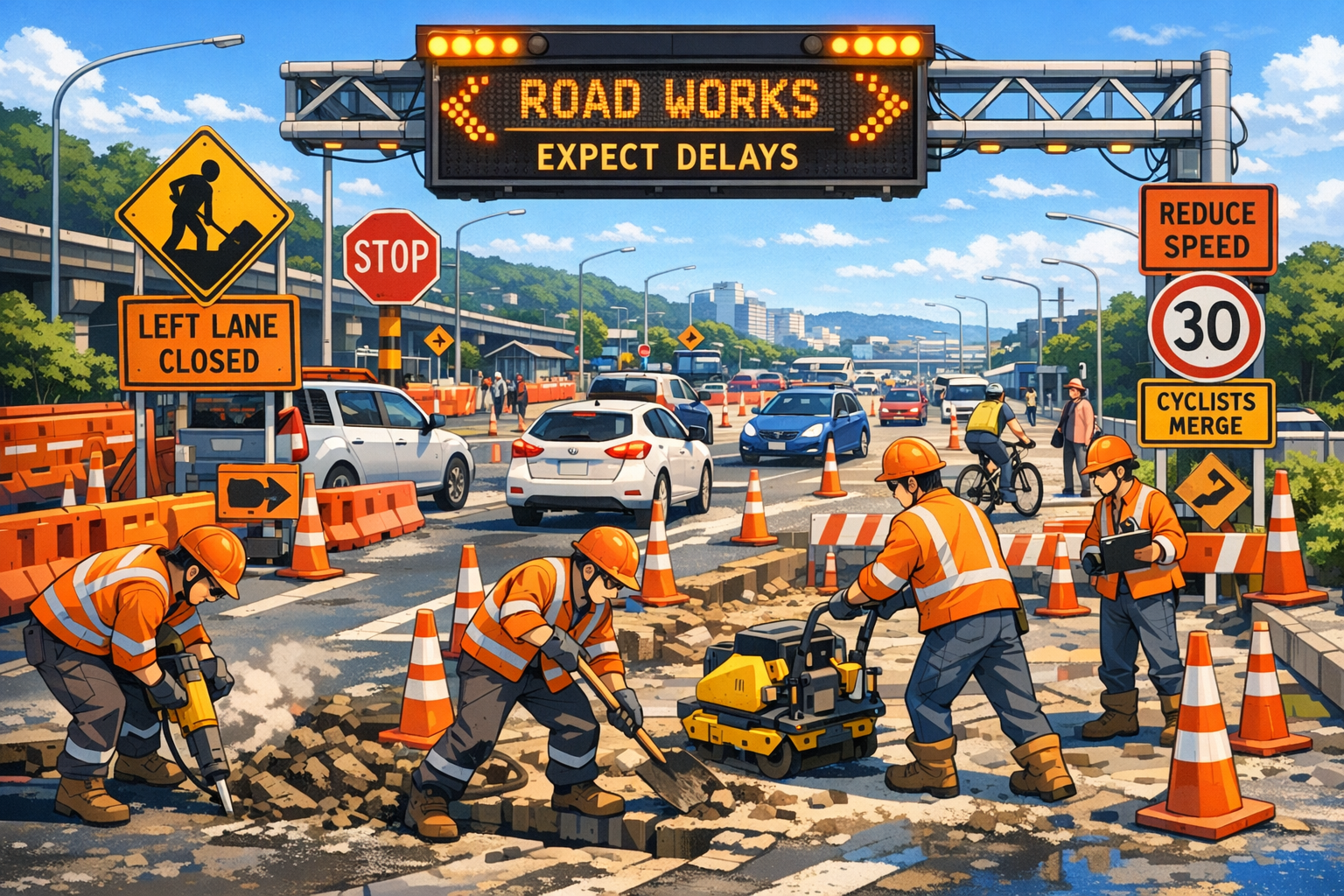
There was a time when managing work in the road corridor felt simpler.
Traffic volumes were lower. Fewer kilometres were travelled. The number of requests to access the network were a fraction of what it is today. Health and safety expectations were less explicit, with fewer formal controls and a narrower understanding of risk. Risk mitigation decisions were largely based on traffic volume alone, and there were fewer stakeholders involved in planning, approving, and delivering work.Much of the work was undertaken directly by road controlling authorities rather than through contractors. The financial, social, and environmental impacts of reducing corridor capacity weren't well understood, and weren't consistently considered.
And if we're honest, we liked that. It felt easier to get things done. Decisions were faster, coordination was limited, and the system appeared simpler to operate.
But that simplicity came at a cost.
The cost of the old way
The lack of visibility, accountability, and consistent safety practices resulted in dangerous working conditions. Conditions that were accepted as normal for far too long.
Statistically, each month, about 1 road worker or road user is killed or seriously injured at a temporary traffic management site in New Zealand. Behind each 'statistic' is a person, a family, a community.
The last 5 years of statistics have been substantially higher than the previous 10 years. These outcomes made it clear that the old way of working was no longer acceptable.
How the environment changed
Over the past two decades, the environment surrounding corridor access has fundamentally shifted. Several key pieces of legislation and guidance have reshaped expectations for everyone involved.
The Local Government Act and the Land Transport Management Act reinforced local government's responsibility to protect public safety, promote community wellbeing, and ensure transport activities are delivered safely and responsibly.
The Health and Safety at Work Act 2015 placed a much stronger emphasis on proactively managing risk and explicitly defined responsibility across the entire system. For temporary traffic management, this meant accountability at every level — from directors and CEOs through to managers, designers, contractors, and workers on the ground. All parties now have a duty to identify hazards and eliminate or minimise risks as far as reasonably practicable, for both workers and road users.
Guidance from WorkSafe New Zealand clarified what good practice looks like for managing health and safety risks for people working on or near roads — whether that's maintenance, construction, events, inspections, emergency response, or anything else that requires access to the corridor.
More recently, NZTA's One Network Framework reframed how we think about roads and streets altogether. Roads are not just traffic corridors. They are places for people to live, work, shop, play, and move. Temporary traffic management responses must now consider who uses the road, how they use it, and why it matters.
There is growing recognition of all transport modes — walking, cycling, public transport, freight, and general traffic along with the need to balance movement with place. Corridor access decisions are now multi-dimensional in a way they never were before.
The tension we now face
Planning work in the road corridor has become more complex. But it has also become more accountable.
There are more contractors working in the corridor. More stakeholders involved in decisions. More regulatory obligations to meet. Higher expectations from communities about how their roads and streets are managed.
Corridor decisions now involve safety, access, economic impact, environmental impact, and social disruption - not just traffic counts.
And yet, the information needed to make good decisions is often fragmented, arriving late, or inconsistent across different parts of the system. Plans are shared by email. Coordination happens on the phone. Spreadsheets track what should be visible to everyone. Critical context lives in people's heads rather than in a shared system.
This creates friction, risk, and inefficiency across the board for road controlling authorities trying to make sound decisions, for contractors trying to plan and deliver work efficiently, and for communities affected by the disruption.
A better way to operate
The answer isn't to make corridor access simpler. The complexity exists for good reason, it reflects the reality that our roads are shared spaces with competing demands, and that the safety of workers and road users must come first.
The answer is to make the complexity manageable.
That means improving visibility of what's happening across the corridor. It means encouraging higher-quality, more timely information from everyone involved. It means enabling clearer trade-offs so that decisions can be made with confidence, not guesswork.
When trust, data quality, and collaboration improve — the system becomes easier to operate. Not because it is simpler, but because it is clearer, more transparent, and better aligned with the outcomes that road controlling authorities, contractors, and communities all expect.
That's what we've enabled with myWorksites.